Showing posts with label stonewall inn. Show all posts

Thursday, December 10, 2009

Stonewall Inn


51-53 Christopher Street

In the United States, the 1960’s were a time of political unrest and radical leftist movements, including the Black Power and anti-war movements. Young people across the nation were coming together and demanding political reform through increasingly radical forms of activism and demonstration. While other groups were militarizing, the visible gay and lesbian groups at the time, sects of what is now referred to as the homophile movement[1], were insistent upon making change through the courts and no where else; the homophile movement remained passive and almost completely invisible.

At this time 51-53 Christopher Street was the location of the Stonewall Inn, a popular hangout for young, mostly non-white gay men, drag queens, and transvestites[2] in the West Village. In the early morning of June 28th, 1969, the bar was the target of a police raid, a common occurrence for gay bars at the time; however, the raid did not proceed as planned. One patron resisted arrest, fought back against the officer attempting to arrest her, and suddenly, the scene became a collective gay uprising, lasting for two days, calling for “Gay Power”.[3] In a matter of months the homophile movement had been transformed into the Gay Liberation movement, and spread across the nation.

This outburst of collective action seemed sudden—there had been no previous push for radical collective action among gay communities—but it was actually born from a specific political context. The Gay Liberation movement in part owes its existence to the radical leftist movements that preceded it, most particularly the Black Power movement, which “came to embody a distinctive form of politics and culture…liberation replaced equality, and self-determination superseded integration,”.[4] Also, the Gay Liberation movement spread with unmatched speed because it used the infrastructures of other radical groups as means for visibility and recruitment. Although the homophile movement refused to take the form of a liberation movement, gay individuals across the country were nevertheless influenced by the radical politics gripping the nation’s youth. As police raids on gay bars were increasing in frequency and violence, the gay community joined together and fought back on Christopher Street.

The original Stonewall Inn closed at the end of 1969, and today the location is a National Historic Landmark, however, the neighborhood around it has changed significantly over the years. As the neighborhood has changed, the result of gentrification, so has the gay movement and gay politics. It started when gay men of color fought back against police violence, which blew up into a grassroots movement for freedom, in the face of a hostile polity.[5] As the movement gained visibility, it also gained more political acceptance until by the 1990’s the gay movement had reverted back to a movement working within the political structure, rather than a movement demanding freedom from the political structure. The gay movement welcomed access to the polity, even if it meant gaining that access by virtue of race, gender, or socio-economic status.[6] By ideologically accepting such access based on certain identities, the gay movement became closed to everyone else, whether or not they were stigmatized by heteronormativity. The gay movement became a white, middle-class movement by accepting the privileges of such an identity.


- Olga Diaz and Elizabeth Perry


[1] Nicholas C. Edsall, Toward Stonewall: Homosexuality and Society in the Modern Western World, University of Virginia Press, 2003.

[2] John D’Emilio, “A New Beginning: The Birth of Gay Liberation,” Sexual Politics, Sexual Communities: The Making of a Homosexual Minority in the United States, 1940-1970 (University of Chicago Press, 1998): 223-239.

[3] John D’Emilio, “A New Beginning: The Birth of Gay Liberation,” Sexual Politics, Sexual Communities: The Making of a Homosexual Minority in the United States, 1940-1970 (University of Chicago Press, 1998): 223-239.

[4] John D’Emilio, “A New Beginning: The Birth of Gay Liberation,” Sexual Politics, Sexual Communities: The Making of a Homosexual Minority in the United States, 1940-1970 (University of Chicago Press, 1998): 223-239.

[5] Mary Bernstein, “Celebration and Suppression: The Strategic Uses of Identity by the Lesbian and Gay Movement,” American Journal of Sociology (University of Chicago Press, 1997): 531-565.

[6] Mary Bernstein, “Celebration and Suppression: The Strategic Uses of Identity by the Lesbian and Gay Movement,” American Journal of Sociology (University of Chicago Press, 1997): 531-565.


Wednesday, December 9, 2009

Stonewall Inn (Sylvia Rivera)

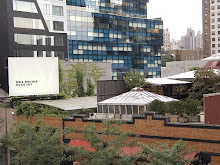
1) Archival photo of youths outside Stonewall Inn, featured on the cover of the Village Voice, July 3, 1969, © Fred W. McDarrah. 2) Outside view of Stonewall Inn, 2009

53 Christopher Street (near 7th Avenue), New York, NY 10014

1 to Christopher Street, A/B/C/D/E/F/V to W 4th Street


In June of 1969, police raided the Stonewall Inn in Greenwich Village, a well-known club for gays, lesbians, and transgendered women. For three days, homosexuals, many of whom lived on the streets, rioted and protested against the actions of the police; the Stonewall Riots are commonly accepted as the birth of the modern gay rights movement in America.[1] An instrumental figure in the riots and, later, a pioneering LGBT activist, the transgendered Latina Sylvia Rivera has only recently been rediscovered. Born in 1951, Ray Rivera was raised by his conservative Venezuelan grandmother, and, by the time he was eleven, kicked out of his home for his effeminate mannerisms. Welcomed by the gay and transgendered street scene on 42nd Street, Ray was rechristened Sylvia.[2] Touted as "the Rosa Parks of the modern transgender movement" by Riki Wilchin, writing for the Village Voice,[3] Rivera and her experiences and activism thus signify a complex and at times tense relationship between race, gender, class, and sexuality, between the separate black civil rights/the various "race riots" and LGBT rights movements/the Stonewall riots, and between racism and homo/transphobia.


The erasure of Rivera from modern retellings of the Stonewall Riots, as well as her erasure from Latino/a studies, marks certain ways in which alternate histories fall in line with normative mainstream histories. In particular, queer history becomes normalized as the experiences of white, middle class homosexuals, ignoring those of poor, transgendered women of color like Rivera; Latino/a studies becomes heteronormative.[4] Similarly, "at the 1973 Gay Pride Rally [...] feminists, outraged because they viewed cross-dressing as sexist, sought to keep Rivera from the stage."[5] Thus Rivera's multiple identities as Latina, queer, transgendered, and poor, become necessarily intertwined in ways that exclude her from popular versions of alternate histories.


Visual representations of the Stonewall Riots and the succeeding gay rights movement also point to this whitewashing of gay history. Photographs from the Village Voice directly following the riots feature the presence of many queer youths of color. A cover for Come Out! in September-October 1970 also shows a woman of color being escorted by police. However, later photos of protesters feature increasingly prominent numbers of whites; queers of color abruptly disappear.[6] Gan writes, following Juana María Rodríguez, "making oneself politically legible in the face of hegemonic culture will necessarily gloss over complexity and difference"[7]; in other words, Gan argues that, in order to be recognized and legitimized by the public, oppressed groups of people must subscribe to normative society.


Today, the New Stonewall Inn stands and operates at this site, though still commonly known as “Stonewall.” Reopened in 2007 after previous renovations and shutdowns, Stonewall is a popular gay bar and nightlife establishment. Its importance is not forgotten; in 2000, the site was declared a National Historic Landmark for its role in gay and lesbian history. However, as the story of Sylvia Rivera shows, this is a history that often neglects lower-class and transgendered people of color. The face of gay liberation is thus defined by white norms. As one anonymous protestor said of a later demonstration, "It was important to look ordinary."[8] Even within gay activism, then, certain normative standards are set: by "ordinary," the protestor effectively meant white, middle class, and gender-appropriate.


- Adela Park and Eric Zhang


Works Cited:


Gan, Jessi. "'Still at the back of the bus': Sylvia Rivera's struggle." Centro Journal. 19.1 (Spring 2007): 124-39.

Meyer, Richard. "Gay Power Circa 1970: Visual Strategies for Sexual Revolution." GLQ: A Journal of Gay and Lesbian Studies. 12.3 (2006): 441-64.

Retzloff, Tim. "Eliding Trans Latino/a Queer Experience in U.S. LGBT History: José Sarria and Sylvia Rivera Reexamined." Centro Journal. 19.1 (Spring 2007): 140-61.

Wilchins, Riki. "A Woman for Her Time: In Memory of Stonewall Warrior Sylvia Ramirez." Village Voice. Feb 26, 2002.


[1] Meyer, 441

[2] Gan, 129, and Retzloff, 146.

[3] Wilchin.

[4] Gan, 128.

[5] Retzloff, 146.

[6] Though he does not discuss the racial implications of these photographs, Richard Meyer provides an excellent study and wide range of visual materials directly and indirectly related to the Riots.

[7] Gan, 127.

[8] Quoted in Meyer, 450.