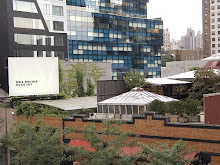
1230 Fifth Avenue. New York, NY.
Located in East Harlem, this museum was founded in 1969 by Puerto Rican educators and community activists. Dedicated to Puerto Rican, Latino, and Caribbean culture of the neighborhood, El Museo del Barrio aims to recognize these cultures and their contribution. (Souccar). Originally located in the classroom of an elementary school, it has grown in size and in influence. Now, located on Fifth Avenue, right across from Central Park, this one-floor museum boasts a 599 seat auditorium, gallery and exhibit spaces, as well as a gift shop and café. Besides temporary exhibits, El Museo del Barrio has a permanent collection of artifacts dating back as far as pre-Columbian times and includes pieces from Latin America and the Caribbean. Museum director Julián Zugazagoitia says, “We are sharing the best of our culture with Latinos and non-latinos. It generates pride among Latinos and it makes an understanding of our culture more pervasive among non-Latinos. Half of our audience is Latino and half non-Latino. Non-Latinos who come to El Museo, what they appreciate is that they discover an opening to the way Latinos deal with their past and present. We are joining together the Latino and non-Latino world” (Garcia). We chose this site because of its goal in pledging to aim for reform where inequality is practiced. We endeavor to document the development of this institution and examine the means by which they exist in the community.
El Museo del Barrio is dedicated to preserving and celebrating Puerto Rican, Caribbean, and all Latin American culture. One of the largest Latino communities in New York City exists in East Harlem, a neighborhood that has had considerable influence on the museum and its visions. East Harlem, known as “Spanish Harlem” or “El Barrio” is home to the largest population of Puerto Ricans in the United States. However, there have been recent initiatives to subject this neighborhood to processes of gentrification, or as most developers refer to it, “urban renewal”. This euphemism obscures the effect that such projects have on the neighborhood. The influx of more expensive real estate and redevelopment has brought in new residents such as young working professionals and college students. However, due to rising rent prices for many of the long-time residents of the neighborhood, such efforts of developers have been faced with opposition from the community (Davila).
In examining Spanish Harlem and El Museo del Barrio, it appears that one would not exist without the other. Discrimination of the community has made it apparent that an outlet was needed, through which their voices might be heard. The museum itself is supported by the community as a small reminder to the outside world of their presence and their culture. In viewing this site through the lens of the racialization of space and the spacialization of race, one sees the relevance of this neighborhood and institution to these larger themes. First, the essence of El Barrio existing as a predominantly Latino population, calls into question the traditional black/white binary that many scholars tend to apply when looking at space. Additionally, there are also many issues of inter-racial tension and class disparity when considering the effect that the real estate market has had on the neighborhood. It has not been unusual that many of the Puerto Rican children who have grown up in one of the numerous government housing projects, have grown up and achieved a higher level of income than their parents did. Consequentially, they have moved out of the projects and even the neighborhood itself, never to permanently reside there again. This creates a rapid cycle of disinvestment that has hurt the area to a large extent. However, some of the children who have become wealthier do return to start their own redeveloping firm that assists in the processes of gentrification. This neighborhood has been commonly marketed as a “gritty” area, one that has not lost its “cultural charm”, yet that is safe and family friendly. The adage “just enough culture” seems to pervade. The museum however, does not discriminate among Latino artists of various nationalities and beliefs. Instead it offers their artwork as homage to the Latino community as a whole and the belief that Latino culture has a richness to offer that is all its own.
Sources
Davila, Arlene. Barrio Dreams: Puerto Ricans, Latinos, and the Neoliberal City. UC Press, Berkeley. 2004.
Garcia, Kimberly. "Cultura on Museum Mile." Hispanic 18.5 (2005): 36-7. OmniFile Full Text Mega. Web. 7 Dec. 2009.
Souccar, Miriam Kreinin. "El Barrio: left behind and angry." Crain's New York Business 19.2 (2003): 20. OmniFile Full Text Mega. Web. 7 Dec. 2009.
“Voces y Visiones: Highlights From El Museo Del Barrio’s Permanent Collection”.